
Gabriel García Márquez crafts a poignant exploration of enduring affection, societal pressures, and the human heart’s relentless pursuit of connection.
The Enduring Appeal of Márquez’s Masterpiece
Márquez’s prose, steeped in lyrical beauty and evocative imagery, continues to captivate readers across generations. The novel’s strength lies in its ability to transcend cultural boundaries, resonating with universal themes of love, loss, and the passage of time.
Its exploration of complex human emotions, presented through richly developed characters and a compelling narrative, offers a profound meditation on the nature of relationships. The masterful blend of realism and fantastical elements, characteristic of Márquez’s style, creates a uniquely immersive reading experience.
Furthermore, the novel’s enduring relevance stems from its insightful commentary on societal norms and the constraints they impose on individual desires. It’s a story that invites contemplation long after the final page is turned, solidifying its place as a cornerstone of Latin American literature.
Brief Overview of “El Amor en los Tiempos del Cólera”
“El Amor en los Tiempos del Cólera” (Love in the Time of Cholera) chronicles the epic love story of Florentino Ariza and Fermina Daza, spanning over fifty years. Their initial passionate connection is thwarted by societal expectations and Fermina’s eventual marriage to the esteemed Dr. Juvenal Urbino.
However, Florentino remains devoted, patiently waiting decades for an opportunity to rekindle their romance. The narrative unfolds against the backdrop of a cholera-ridden 19th-century Colombia, exploring themes of enduring love, aging, and the complexities of human desire.
The novel intricately weaves together their individual lives and experiences, showcasing Florentino’s numerous affairs and Fermina’s evolving perspective on love and marriage. Ultimately, it’s a poignant exploration of a love that defies time and circumstance, questioning conventional notions of romance.

The Historical and Social Context
19th-century Colombia profoundly shaped the novel, influencing societal norms, class structures, and the pervasive threat of disease and its impact.
Cholera Epidemics in 19th-Century Colombia
Colombia faced recurrent and devastating cholera outbreaks throughout the 19th century, significantly impacting its population and societal structures. These epidemics, originating in Asia, arrived in the Americas via trade routes, spreading rapidly through unsanitary conditions and limited medical knowledge. The disease instilled widespread fear and disrupted daily life, leading to economic hardship and social unrest.
Márquez vividly portrays the atmosphere of dread and the desperate attempts to combat the illness, reflecting the historical reality of quarantine measures, rudimentary medical practices, and the high mortality rates. Cholera wasn’t merely a backdrop; it symbolized the fragility of life and the ever-present threat of death, deeply influencing the characters’ perceptions and actions within the narrative. The recurring presence of the disease underscores the precariousness of existence in that era.
Social Stratification and its Impact on Relationships
19th-century Colombian society was rigidly stratified, with a clear hierarchy based on wealth, lineage, and social standing. This deeply ingrained social structure profoundly influenced romantic relationships, often dictating who could marry whom and the expectations placed upon those unions. Families prioritized maintaining or elevating their social position, frequently arranging marriages based on economic and political considerations rather than affection.
The novel meticulously illustrates how these societal constraints shaped the characters’ choices and limited their freedoms. Fermina’s initial rejection of Florentino, and her subsequent marriage to Dr. Urbino, exemplify the pressure to conform to societal expectations. The barriers imposed by class differences create obstacles and tensions, highlighting the power dynamics at play and the sacrifices individuals made to navigate this complex social landscape.
The Role of Tradition and Honor
Traditional values and the preservation of family honor were paramount in 19th-century Colombian society, heavily influencing courtship and marriage. A woman’s reputation was meticulously guarded, and any perceived transgression could bring shame upon her family. This emphasis on propriety dictated acceptable behavior and limited women’s agency in matters of the heart.
The novel showcases how these societal norms created a stifling atmosphere, particularly for women like Fermina Daza. Expectations surrounding marriage and motherhood were rigid, and deviations from the established path were often met with disapproval. The pursuit of honor often overshadowed genuine affection, leading to strategic alliances and suppressed desires. Characters grapple with balancing personal feelings against the weight of tradition and the need to uphold their family’s reputation.

Characters: A Deep Dive
Márquez populates his narrative with complex individuals, each grappling with love, loss, and societal expectations in a vividly realized world.
Florentino Ariza: The Eternal Bachelor
Florentino embodies unwavering devotion, dedicating his life to the memory of Fermina Daza after a youthful rejection. He transforms into a persistent, almost obsessive figure, meticulously preparing for a future reunion decades in the making.
His prolonged bachelorhood isn’t one of solitude, but rather a strategic postponement of fulfillment, filled with numerous affairs undertaken as a means of preserving his romantic ideal. These relationships, while numerous, lack the depth and significance he attributes to his love for Fermina.
Florentino’s character is marked by a peculiar blend of romantic idealism and pragmatic calculation, showcasing a man willing to navigate societal norms and personal compromises to achieve his ultimate desire. He represents a steadfast, if unconventional, pursuit of love across the expanse of time.
His Obsession with Fermina Daza
Florentino’s initial encounter with Fermina ignites a consuming passion that defines his existence. This isn’t merely youthful infatuation; it evolves into a lifelong obsession, shaping his decisions and coloring his perceptions of the world. He meticulously preserves every memory of her, constructing an idealized image that fuels his decades-long wait.
His devotion borders on the fantastical, manifesting in elaborate schemes and unwavering commitment. He monitors her life from afar, celebrating her successes and mourning her hardships, all while maintaining a carefully constructed distance. This silent adoration becomes the core of his identity.

The nature of his obsession is complex, blending genuine affection with a possessive desire to control the narrative of their potential future. It’s a love built on longing and sustained by the belief in a destiny yet to be fulfilled.
Florentino’s Various Affairs
While steadfastly awaiting Fermina, Florentino engages in numerous affairs, viewing them as practical exercises in the art of love – a means of honing his skills and maintaining his romantic capacity. These relationships, however, are largely transactional and devoid of the emotional depth he reserves for Fermina.
He seeks out women from diverse social backgrounds, often exploiting his position and charm. These encounters serve as temporary distractions, allowing him to experience physical intimacy while reaffirming his belief that no other woman can compare to his idealized Fermina.
These affairs reveal a pragmatic and somewhat cynical side to Florentino’s character, highlighting the contrast between his professed romanticism and his actual behavior. They demonstrate a willingness to use others to fulfill his own needs, ultimately underscoring the self-serving nature of his prolonged pursuit.

Fermina Daza: From Youthful Idealism to Pragmatism
Initially captivated by Florentino’s passionate letters, Fermina embodies youthful romanticism, dreaming of a grand and all-consuming love. However, her perspective shifts dramatically after experiencing the stability and social prestige offered by Dr. Juvenal Urbino.
She gradually embraces a more pragmatic worldview, prioritizing societal acceptance and material comfort over the intensity of youthful passion. Her marriage to Urbino represents a conscious choice for security and respectability, a rejection of the uncertain future Florentino offered.
Throughout her life, Fermina demonstrates a remarkable capacity for adaptation and resilience, navigating the complexities of social expectations and personal desires. While she never fully forgets Florentino, she constructs a fulfilling life within the boundaries of her chosen path, ultimately redefining her understanding of love and happiness.
Her Marriage to Dr. Juvenal Urbino
Fermina’s decision to marry Dr. Juvenal Urbino is a pivotal moment, representing a deliberate move towards societal acceptance and financial security. Urbino, a respected physician and a man of considerable standing, offers her a life vastly different from the uncertain passion promised by Florentino.
Their union, though initially lacking the fiery romance of her youthful infatuation, blossoms into a companionship built on mutual respect and shared social ambitions. Urbino provides Fermina with a comfortable existence and elevates her social status, allowing her to flourish within the established norms of their society.
The marriage isn’t without its complexities, marked by periods of emotional distance and unspoken tensions. However, it ultimately proves to be a stable and enduring partnership, shaping Fermina’s life for decades and influencing her evolving perspective on love and fulfillment.
Fermina’s Evolving Perspective on Love
Initially captivated by Florentino’s ardent declarations, Fermina’s understanding of love matures significantly throughout her life. Her youthful idealism gives way to a more pragmatic view, shaped by the realities of societal expectations and the stability offered by her marriage to Dr. Urbino.
Through years of companionship with Urbino, she learns to appreciate a different kind of affection – one rooted in respect, shared experiences, and mutual support. This doesn’t erase the memory of her first love, but it reframes her perception of what love can be.
Ultimately, Fermina comes to recognize that love exists in many forms, and that enduring happiness isn’t solely dependent on passionate intensity. Her final reunion with Florentino reveals a nuanced understanding of love’s complexities, acknowledging both its fleeting nature and its enduring power.
Dr. Juvenal Urbino: The Embodiment of Respectability
Dr. Urbino represents the pinnacle of societal achievement and professional success in 19th-century Colombia. He is a man of science, dedicated to modernizing medicine and improving public health, earning him widespread admiration and a prominent social standing.
His character is defined by his pragmatism, discipline, and unwavering commitment to order. He embodies the values of the emerging bourgeois class, prioritizing reason and progress over romantic ideals. Urbino’s marriage to Fermina is, in many ways, a strategic alliance that solidifies his position within the community.
Despite his outward composure, Urbino harbors a complex inner life, grappling with loneliness and the limitations of his own worldview. He provides a stark contrast to Florentino’s perpetual romanticism, showcasing a different path to navigating love and life.
His Scientific Pursuits and Social Standing
Dr. Urbino’s dedication to scientific advancement elevates him to a position of considerable influence within Colombian society. He tirelessly champions public health initiatives, battling cholera outbreaks and advocating for improved sanitation – endeavors that earn him both respect and political leverage.
His medical practice isn’t merely a profession; it’s a symbol of modernity and progress. He introduces innovative techniques and challenges traditional beliefs, establishing himself as a forward-thinking leader. This success translates into a comfortable lifestyle and access to the highest social circles.
Urbino skillfully navigates the complexities of social hierarchy, leveraging his status to secure opportunities and maintain his standing. He embodies the aspirations of a rising class, demonstrating the power of intellect and ambition in a rapidly changing world.

The Contrast Between Urbino and Florentino
Dr. Urbino represents practicality, societal acceptance, and a measured approach to life, embodying respectability and tangible achievement. He builds a life founded on logic, progress, and public service, offering Fermina a secure and stable existence.
Florentino, conversely, is defined by his unwavering, almost obsessive romanticism. He exists on the periphery of societal norms, fueled by a decades-long, largely unfulfilled passion. His world is one of poetic longing and clandestine affairs, a stark contrast to Urbino’s public life.
This dichotomy highlights the novel’s central conflict: the tension between pragmatic love and idealized devotion. Urbino offers a comfortable reality, while Florentino embodies a fantastical, enduring dream, representing two fundamentally different paths to fulfillment.

Themes Explored in the Novel
Márquez delves into love’s complexities, the passage of time, societal constraints, and the inevitability of mortality, creating a rich thematic tapestry.
The Nature of Love: Passion, Patience, and Obsession
The novel profoundly examines love’s multifaceted nature, showcasing its spectrum from youthful, impulsive passion to the quiet endurance of decades-long devotion. Florentino Ariza embodies obsessive love, meticulously preserving his feelings for Fermina Daza across fifty years, demonstrating a patience bordering on the fantastical.
Conversely, Fermina’s journey reveals a more pragmatic approach, initially captivated by Florentino’s romantic fervor but ultimately choosing a marriage based on societal standing and companionship. Dr. Urbino represents a mature, respectful affection, built on shared intellectual pursuits and mutual admiration. Márquez doesn’t present a singular definition of love; instead, he illustrates its diverse forms, highlighting how it’s shaped by time, circumstance, and individual temperament.
Time and Memory: The Weight of the Past
Throughout the narrative, time isn’t linear but cyclical, constantly revisiting and reshaping the characters’ present. Florentino’s decades-long wait for Fermina is a testament to memory’s power – he meticulously preserves every detail of their youthful encounters, fueling his unwavering devotion.
However, memory is also fallible, colored by nostalgia and subjective interpretation. Fermina’s recollections of Florentino evolve as she gains life experience, challenging the idealized image she once held. The past isn’t simply a bygone era; it actively influences the characters’ choices and shapes their understanding of love and loss. Márquez suggests that we are all, to some extent, prisoners of our memories, forever bound by the weight of what has been.
Death and Mortality: Facing the Inevitable
The specter of death permeates the novel, serving as a stark reminder of life’s fragility and the transient nature of earthly passions. Dr. Urbino’s dedication to public health is, in part, a battle against mortality, yet he ultimately succumbs to its grasp.
Florentino’s prolonged lifespan allows him to witness the passing of generations, forcing him to confront his own mortality. The novel doesn’t shy away from depicting the physical realities of aging and decay, but it also suggests that love can transcend death, persisting as a powerful force even in the face of oblivion. Ultimately, Márquez portrays death not as an ending, but as an integral part of the life cycle, lending urgency and meaning to the pursuit of love.
Social Class and its Constraints
The rigid social hierarchy of 19th-century Colombia profoundly shapes the characters’ lives and romantic possibilities. Fermina’s initial rejection of Florentino stems, in part, from his perceived lower social standing. Her eventual marriage to Dr. Urbino represents a strategic ascent within the societal structure.
Florentino’s attempts to improve his social position through wealth and influence demonstrate the pervasive power of class distinctions. The novel illustrates how societal expectations and prejudices can dictate romantic choices, limiting individual freedom and perpetuating inequality. Márquez subtly critiques the hypocrisy and superficiality of the upper class, revealing the constraints they impose on genuine connection and authentic expression of love.

Symbolism and Motifs
Recurring images like the river, colors, and avian life enrich the narrative, representing life’s journey, obsession, and the yearning for liberation.
The River Magdalena: A Symbol of Life and Journey
The Magdalena River serves as a powerful, central symbol throughout the novel, embodying the very essence of life’s flow and the relentless passage of time. It’s not merely a geographical feature, but a dynamic character mirroring the characters’ journeys – both physical and emotional.
Its currents represent the unpredictable nature of fate, carrying characters towards their destinies, sometimes gently, sometimes violently. The river’s vastness reflects the expansive scope of human experience, encompassing love, loss, and the complexities of Colombian society.
Furthermore, the river acts as a conduit for connection, linking different regions and communities, much like the interwoven relationships within the story. Its presence consistently underscores themes of movement, change, and the enduring power of nature.
Yellow: Representing Decay and Obsession
The recurring motif of yellow throughout the narrative isn’t simply a color choice; it’s a deeply layered symbol representing both physical and moral decay, alongside the consuming nature of obsessive love. From the yellow fever that plagues the city to the yellow garments worn by certain characters, the hue consistently foreshadows illness, decline, and impending doom.
However, yellow also embodies the feverish intensity of Florentino Ariza’s decades-long obsession with Fermina Daza. It mirrors the unhealthy, consuming passion that drives his actions and defines his existence.
This duality – decay and obsession – creates a potent symbolic resonance, highlighting the destructive potential of unchecked desire and the inevitable erosion of time and beauty.
Birds: Foreshadowing and Freedom
Birds serve as a multifaceted symbol within the novel, frequently employed for both foreshadowing and representing a yearning for freedom. Their appearances often precede significant events, acting as subtle omens of change, loss, or impending fate. The specific species observed – doves, parrots, and others – each carry nuanced connotations, adding layers to their symbolic weight.
Conversely, birds embody the desire to escape societal constraints and the limitations imposed by circumstance. They represent a longing for liberation, particularly for characters trapped by duty, expectation, or unrequited love.
This duality – premonition and aspiration – makes the avian imagery a powerful and recurring element in Márquez’s storytelling.
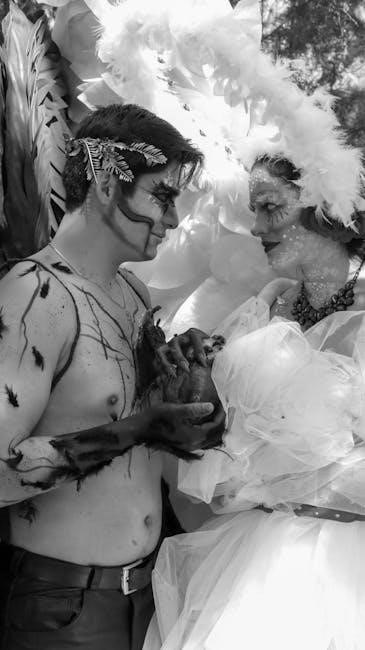
Narrative Style and Techniques
Márquez masterfully blends lyrical prose, intricate timelines, and vivid imagery, creating a uniquely immersive and captivating reading experience for the audience.
Magical Realism: Blurring the Lines of Reality
A hallmark of Márquez’s style, magical realism seamlessly integrates fantastical elements into an otherwise realistic setting. In this novel, the supernatural isn’t presented as extraordinary, but rather as a natural part of everyday life within the colonial Cartagena.
Exorcisms, premonitions, and the seemingly impossible coexist with historical events and social realities. This technique isn’t merely decorative; it serves to deepen the exploration of themes like faith, superstition, and the power of belief. The blurring of boundaries between the rational and the irrational reflects the characters’ internal states and the cultural context of the time.
It allows Márquez to comment on the complexities of human experience and the limitations of purely logical explanations, enriching the narrative with layers of meaning and ambiguity.
Non-Linear Narrative: Shifting Timelines
Márquez masterfully employs a non-linear narrative structure, frequently disrupting chronological order to reveal the story’s complexities gradually. The novel doesn’t unfold in a straightforward manner; instead, it weaves between past and present, offering glimpses into different periods of Sierva María’s life and the unfolding events in Cartagena.
This technique mirrors the way memory functions, fragmented and associative. It allows Márquez to build suspense, reveal character motivations, and explore the lasting impact of past experiences. The shifting timelines aren’t arbitrary; they are carefully orchestrated to enhance thematic resonance and create a sense of disorientation, mirroring Sierva María’s own internal turmoil.
By refusing a conventional timeline, Márquez invites readers to actively participate in constructing the narrative’s meaning.
Use of Imagery and Sensory Detail
Márquez’s prose is richly imbued with vivid imagery and sensory detail, transporting the reader directly into the sweltering, vibrant world of 17th-century Cartagena. He doesn’t merely describe; he evokes – the scent of jasmine, the oppressive heat, the dampness of the stone walls, the sounds of the city’s bustling marketplace.
This meticulous attention to sensory experience isn’t simply decorative. It serves to heighten the emotional impact of the narrative and create a palpable atmosphere of both beauty and decay. The descriptions of Sierva María’s physical and mental state are particularly striking, utilizing imagery of darkness, confinement, and feverish delirium.
Through these evocative details, Márquez crafts a deeply immersive reading experience, allowing us to feel the weight of the colonial setting and the characters’ internal struggles.
“El Amor en los Tiempos del Cólera” remains a celebrated masterpiece, profoundly influencing literature with its exploration of love’s enduring power.
The Novel’s Impact on Literature
Gabriel García Márquez’s El Amor en los Tiempos del Cólera significantly broadened the scope of Latin American literature, solidifying magical realism as a prominent literary style globally. The novel’s intricate narrative structure, blending historical context with fantastical elements, inspired countless authors to experiment with form and genre.

Its exploration of love – in its various forms, from youthful passion to enduring companionship – resonated deeply with readers and critics alike, influencing subsequent portrayals of romantic relationships in literature. The novel’s nuanced character development and thematic depth challenged conventional storytelling, paving the way for more complex and psychologically driven narratives.
Furthermore, the work’s success contributed to increased international recognition of Latin American authors and their unique perspectives, fostering a greater appreciation for diverse literary traditions.
“El Amor en los Tiempos del Cólera” as a Universal Story
Despite its specific Colombian setting and historical backdrop, El Amor en los Tiempos del Cólera transcends cultural boundaries to explore universally relatable themes. The novel’s central concern – the enduring power of love in the face of time, societal constraints, and personal loss – resonates with readers across generations and cultures.
The characters’ struggles with desire, commitment, and the complexities of human connection are profoundly human, mirroring experiences found in diverse societies. Márquez masterfully portrays the enduring search for meaning and fulfillment through love, a quest that remains central to the human condition.
Ultimately, the novel’s enduring appeal lies in its ability to illuminate the timeless and universal aspects of the human heart, making it a story that continues to captivate and move audiences worldwide.
Leave a Reply
You must be logged in to post a comment.